
PBL with Chibitronics
Today, we’re featuring some fun and easy ways to use Chibitronics in the classroom, within the context of cross-curricular Project-Based Learning. Our guest, Michelle Hollander, who recently reviewed a few of our products, has some ideas to share!
Chibitronics provides an innovative, hands-on approach to teach students about circuitry and integrate paper crafting across a variety of topics and subject areas including STEAM, social studies, and even language arts.
Working with Chibitronics encourages students to create, evaluate, analyze and make connections between ideas, apply their learning, understand concepts, and remember/recall facts. These are all pillars of Bloom’s taxonomy, thus encouraging the practice of real-world applications and cognitive skills. This in turn is why Chibitronics would be an excellent addition to any project-based learning initiative. With its ease of use, low cost, and various component options, it offers so many solutions for enhancing Project-Based Learning (PBL).
The Engineering Design Process
Creating with Chibitronics follows the Engineering Design Process (EDP) as users begin by identifying a need and their constraints. What is it that they want to create and why? Are they limited in the materials or time that they have to develop their project? How can they adjust or prepare for any challenges they might face? This leads to background research, brainstorming, and planning before students get to the building process. Once they have a prototype, students should then test and evaluate their product to see if it functions as intended and consider how they can improve its efficacy. After any redesigns, it is also important for students to have an opportunity to share their work.
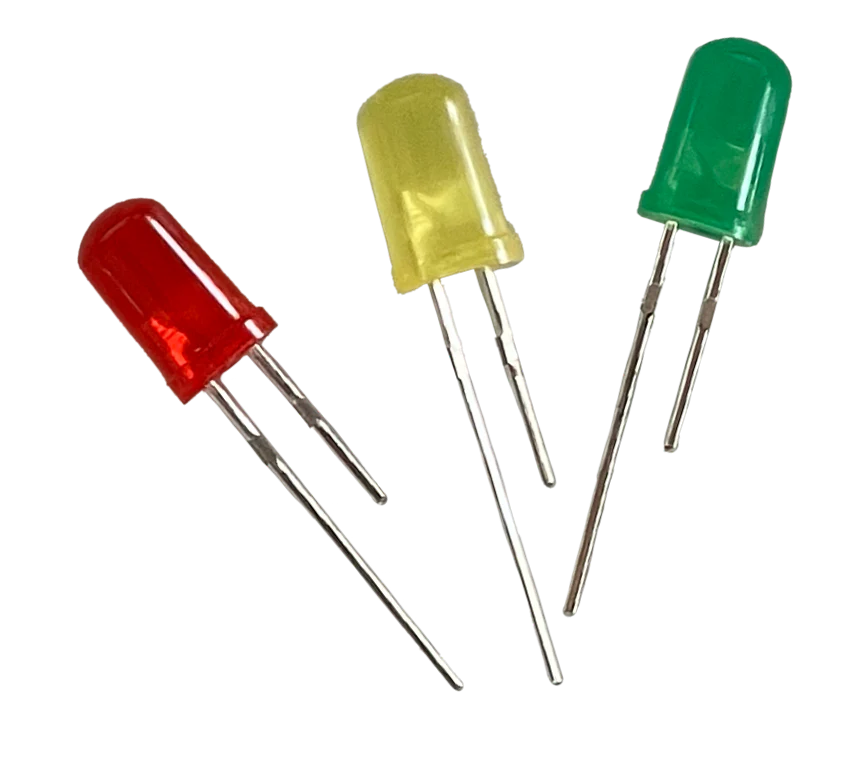
The best part of all of this is that students get to work hands-on with a variety of light-up components (Circuit Sticker LEDs, Launchpad LEDs, and Through-Hole LEDs) and conductive materials, such as fabric tapes, Resistor Stickers, Pressure Sensor Sheets, and more!
Circuit Sketcher
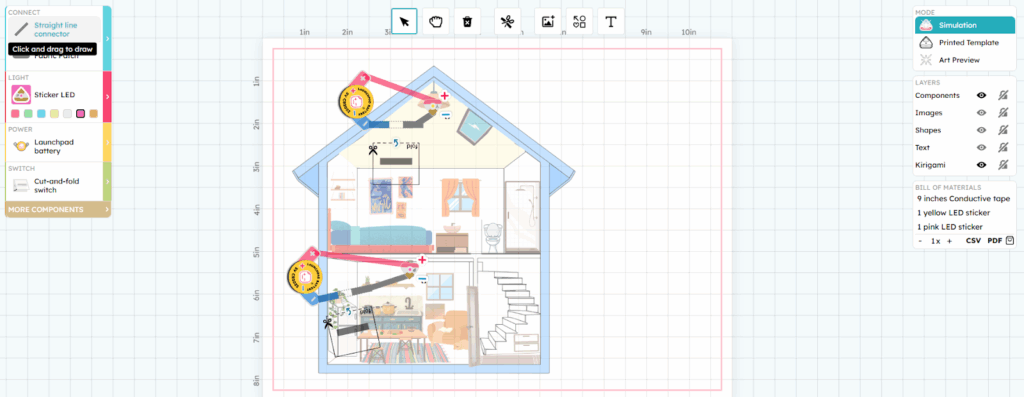
With all of the great physical components of Chibitronics, they are also developing a new browser-based design software known as Circuit Sketcher (in Beta). This innovative tool, which is currently free to explore, allows students to digitally design circuits, experiment, and virtually manipulate components as they plan their designs.
I personally love that as you add components, a Bill of Materials receipt is generated, indicating materials that will be needed for students’ projects.
Inspiring PBL
The possibilities for developing projects with Chibitronics are endless. Imagine creating lighting for a tiny house model, specialty truck, or even an amusement park ride. LEDs and DIY sensors may enhance a board game experience or even be used in constructing wearable technology, among a myriad of other projects.
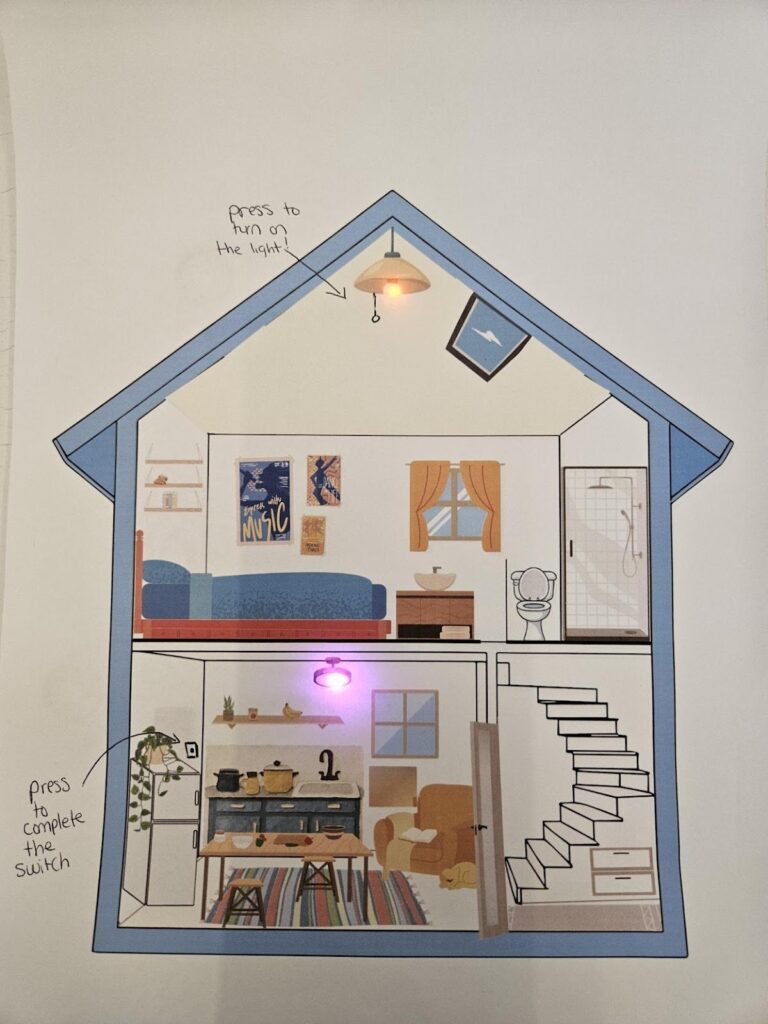
Plus, designs don’t have to be 2D. Imagine creating 3-dimensional projects, too!
To help guide this process, you can pair Chibitronics with Teq’s iBlocks for a premier project-based learning solution.
Now, only one question remains: What will you create?
Meet Michelle Hollander

Michelle is the Content and Curriculum Lead at Teq, where she manages the creation of an innovative Project-Based Learning solution known as iBlocks, in addition to creating content on OTIS for educators professional development platform. Additionally, Michelle has her B.S. and M.S. in Marine Science. She previously worked as a STEM/STEAM and environmental science educator for various organizations and was a NSF GK-12 SPARTACUS Fellow. Michelle is passionate about communicating science and using new technologies to make information accessible to a variety of audiences. She is always excited to learn something new and share her findings with others.