
Touchable Art You Can Hold
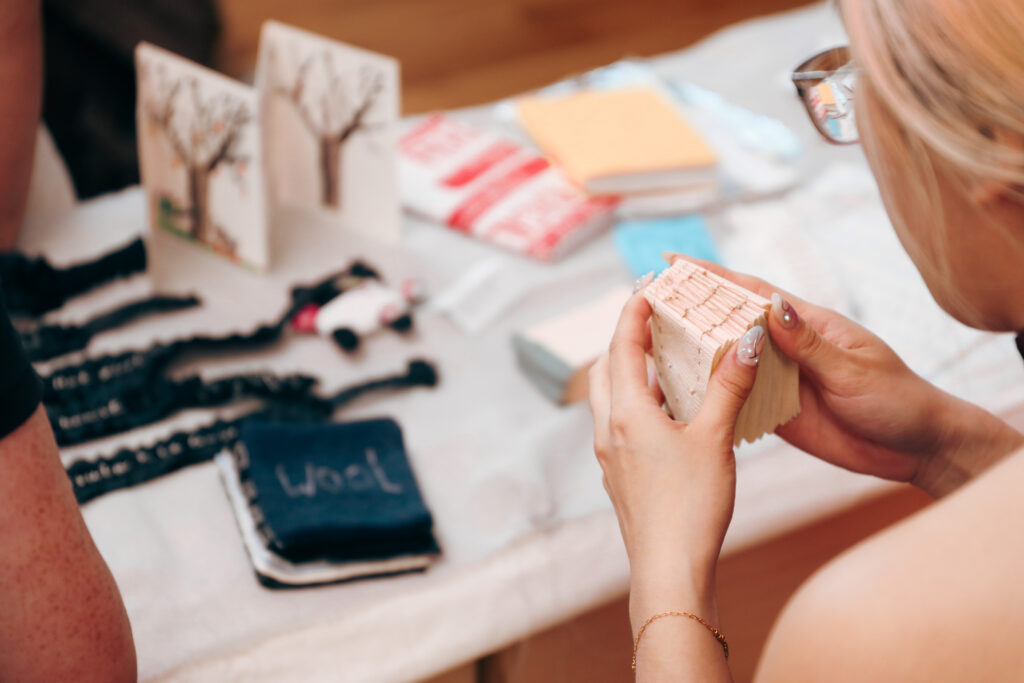
I especially enjoy making tactile, narrative-driven pieces that people can hold and engage with.
– Helen Lin
Today, we are spotlighting Helen Lin, a clever creator of colorful, touchable art meant to be explored with the hands. Helen first caught our eye when she shared her mind-blowing, electronic, risograph-printed pop-up book, Tela Specula.
In her upcoming exhibition, to touch is to feel, Helen will be exhibiting Tela Specula at the Living Gallery in Brooklyn, NY from 9-13 April. Learn More Below
This fall, she plans to join our 2026 LightUpPopUpTober Team, so be on the lookout for new work!
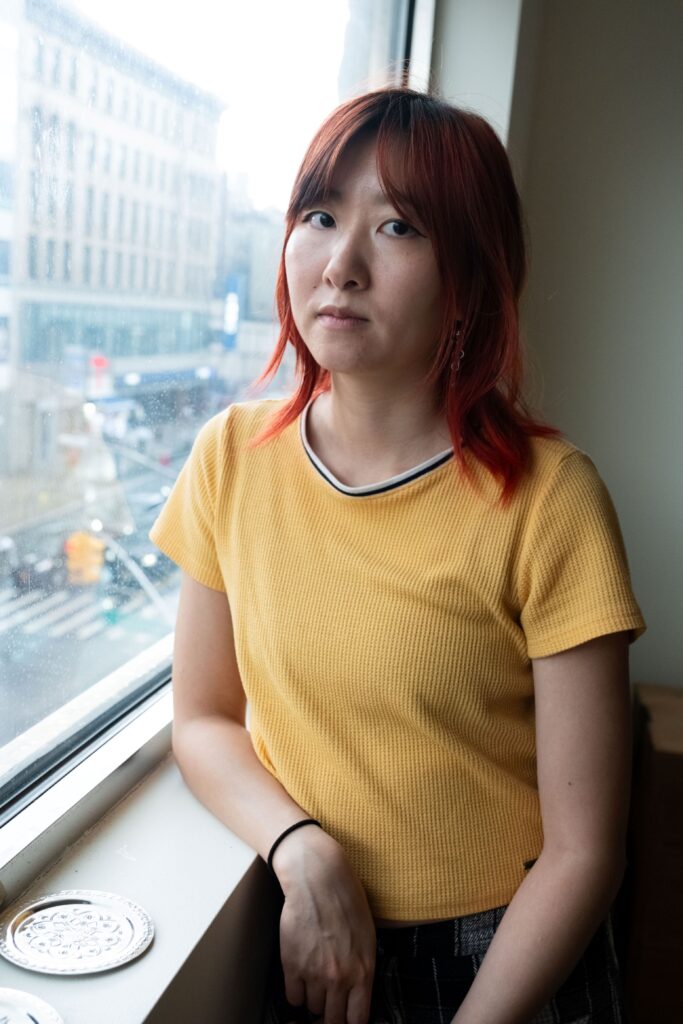
Please tell us a little bit about yourself.
I’m a digital media and textile artist born and raised in New York City. My favorite meal is hot pot and my favorite ingredients to throw in are king oyster mushroom and tofu skin. My favorite way to relax is by keeping my hands busy crafting while listening to a podcast. This past year, I’ve been exploring risograph printing and machine knitting. I’m always excited and restless to learn new skills.
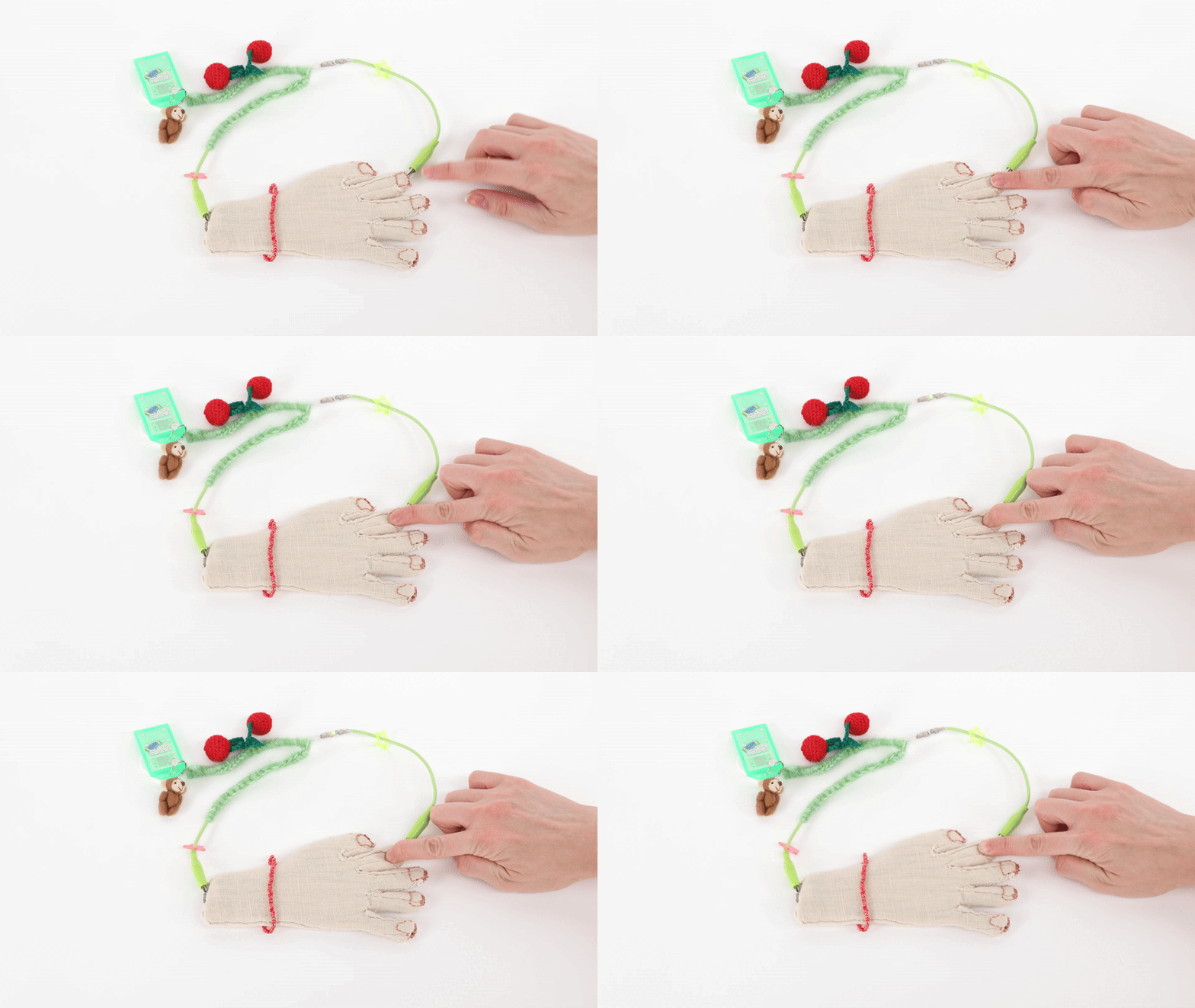
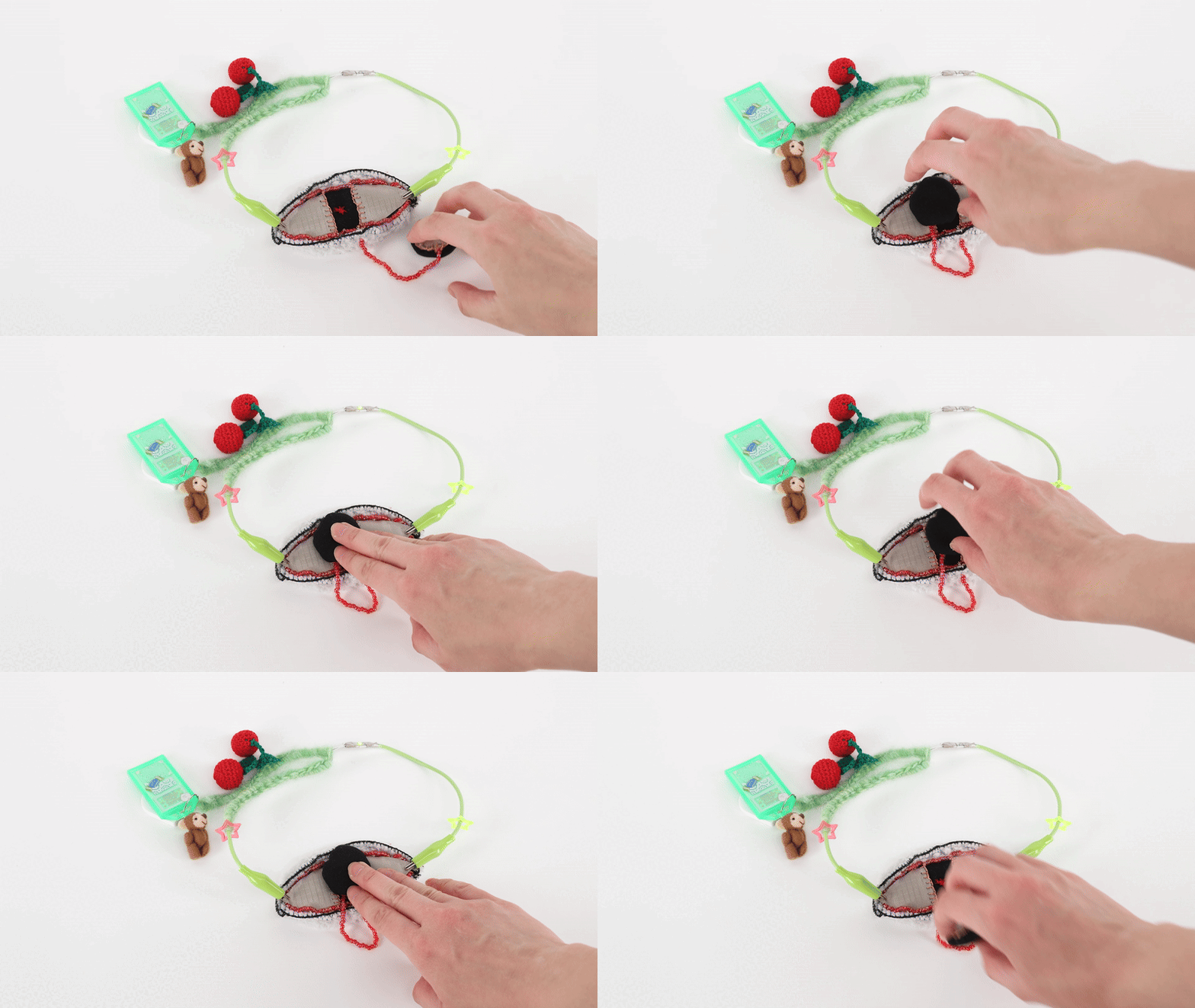
This is a plushie that has five digital switches, similar to the Eye button Switch (depicted below), but with one for each fingertip.
How are you using light in your creations?
I use light and simple circuits to add interactivity to my books and objects. Chibitronics makes it easy to integrate these elements into my process.
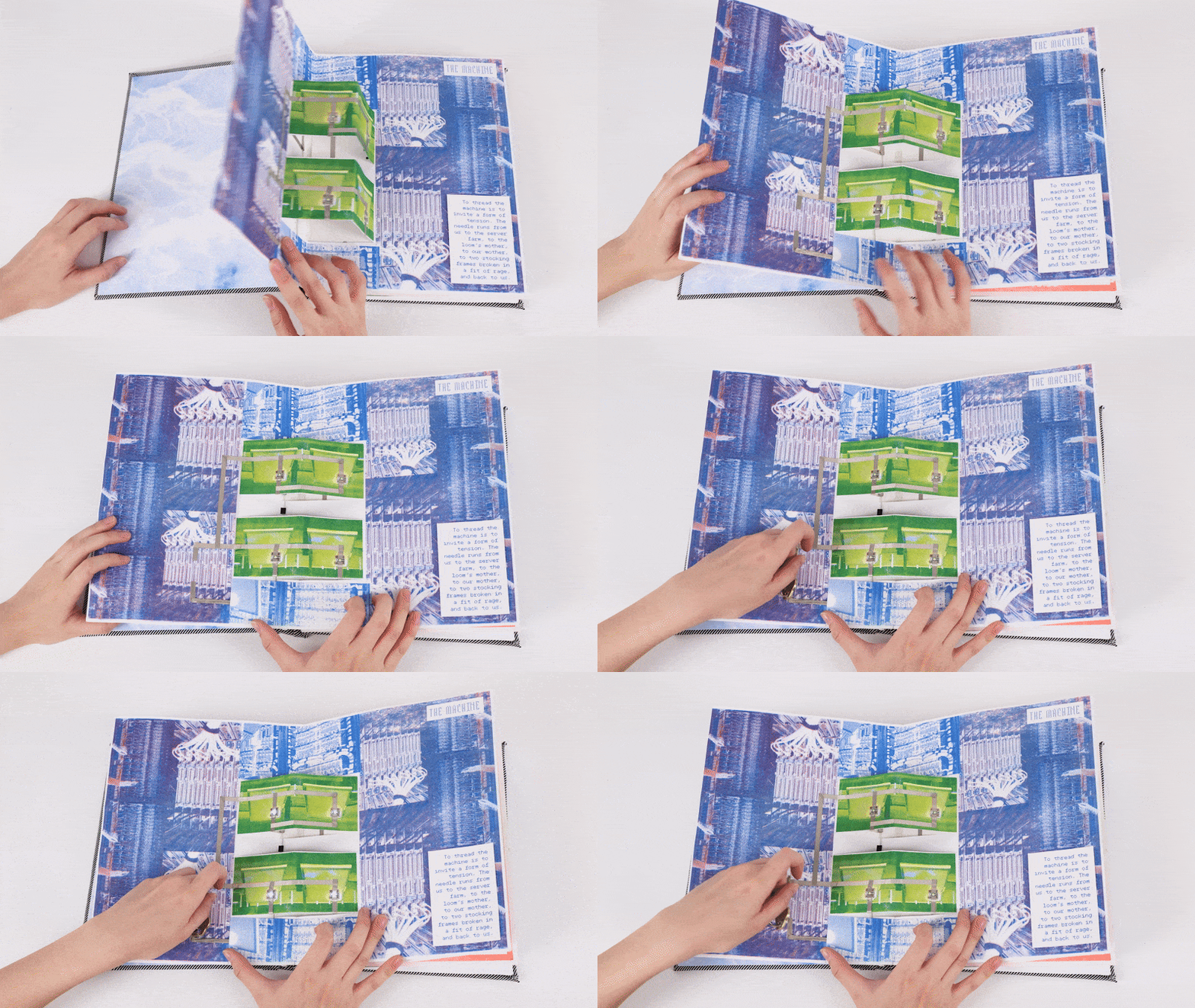
Perhaps the opening of a page may trigger a sound, or the press of a button would illuminate a night sky. These additions bring another layer of storytelling and make the work more immersive and playful.
How did you come to create your book, Tela Specula?
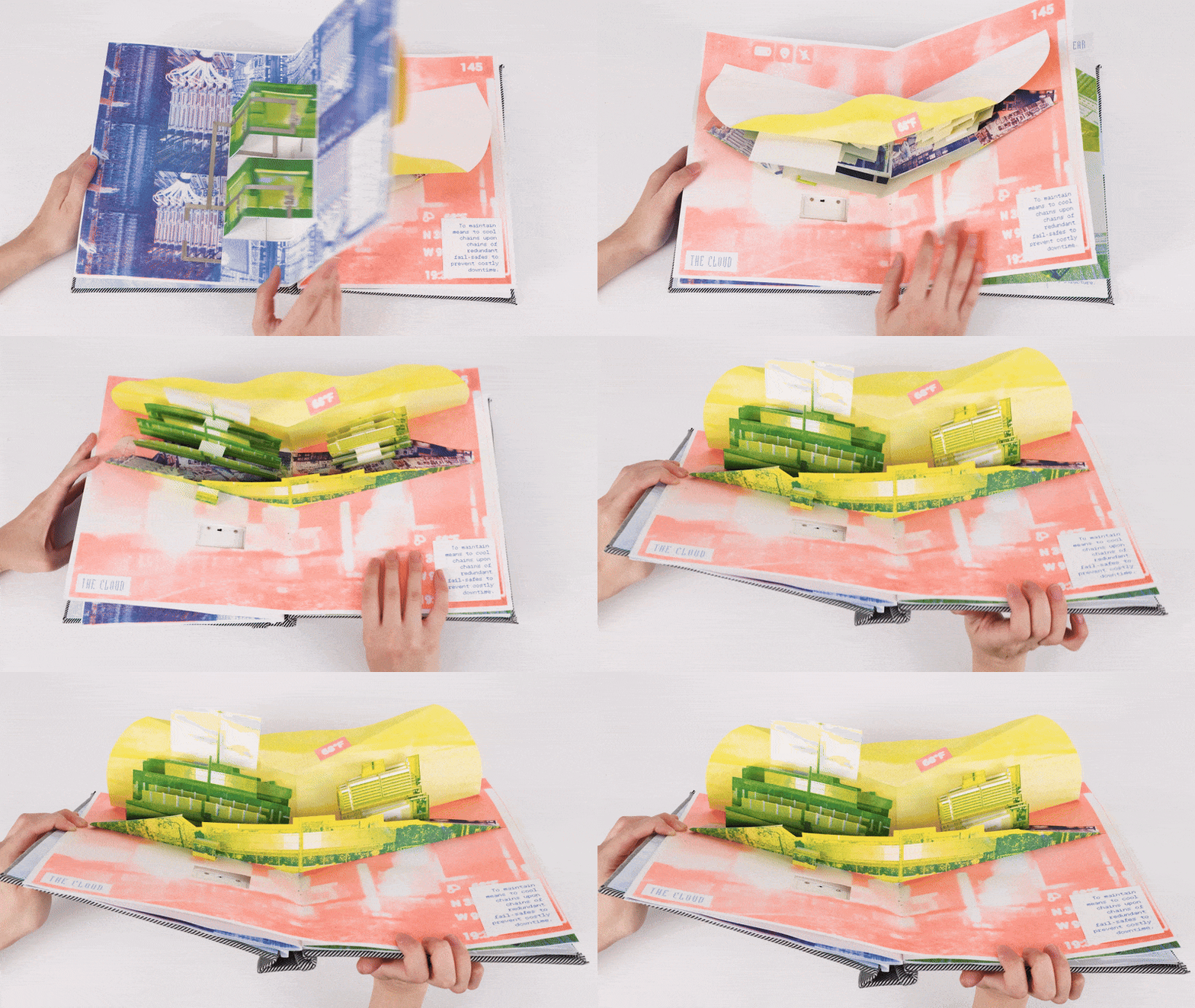
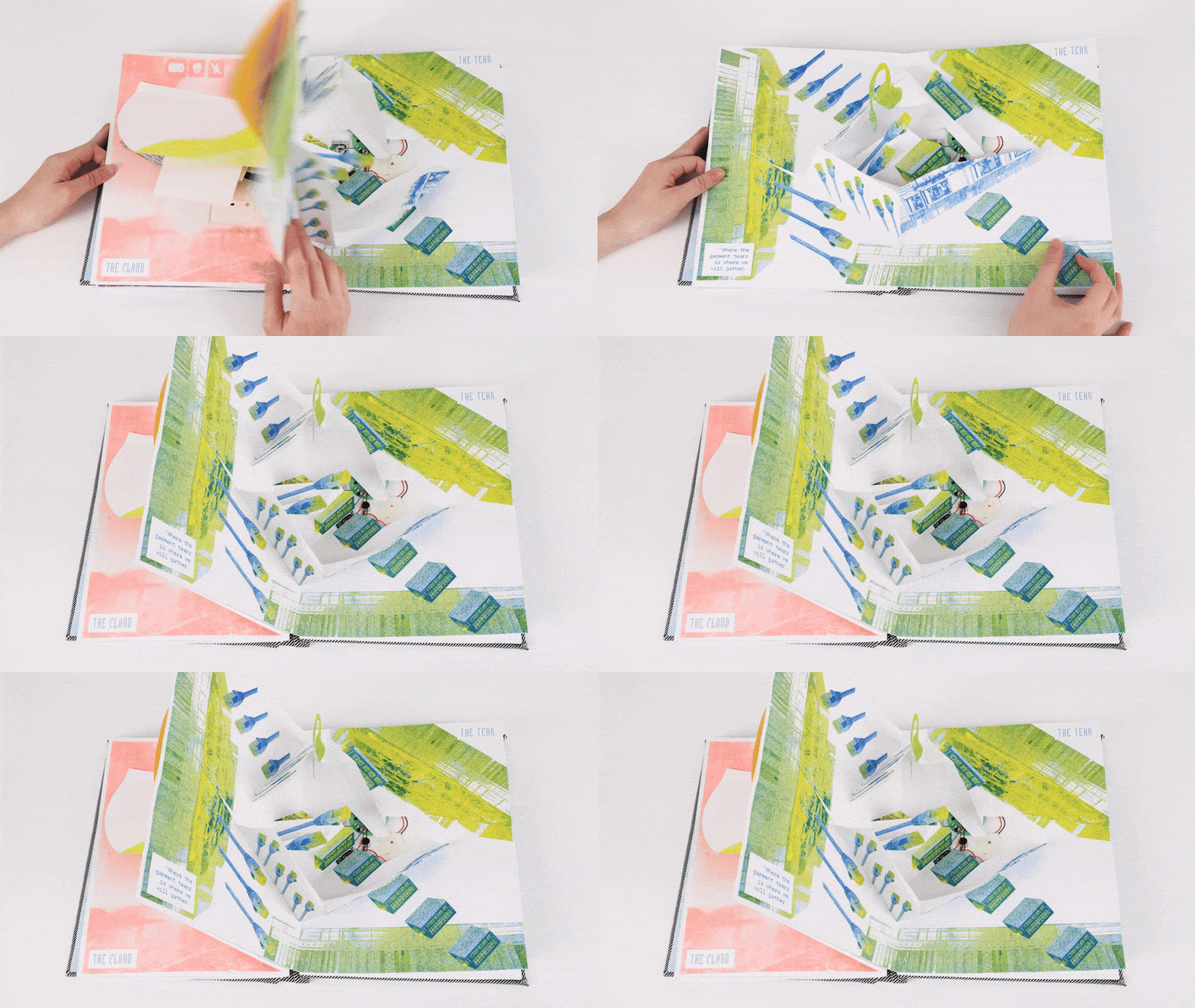
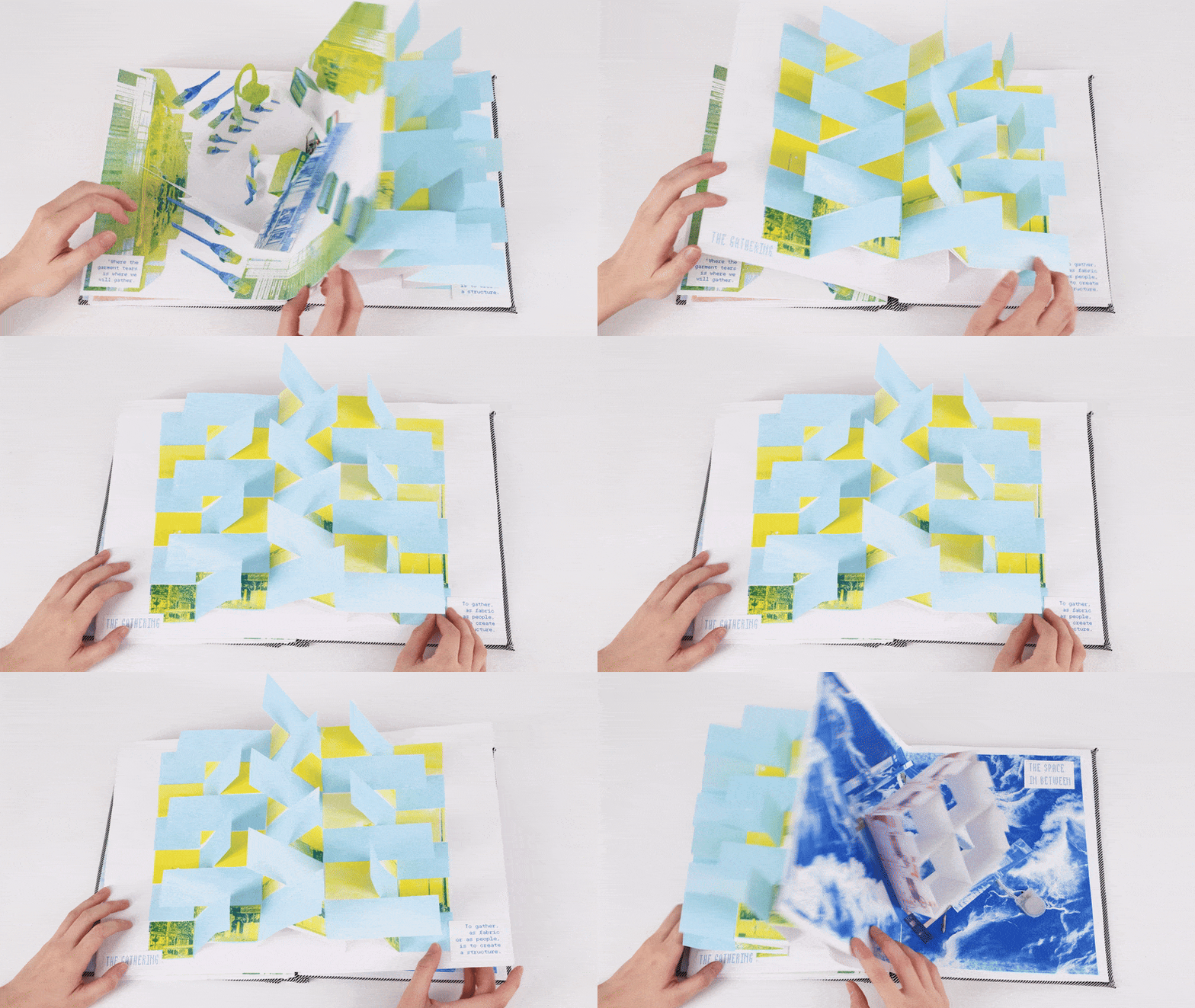
Tela specula is a pop-up paper circuit book deconstructing the form of the machine by cutting up and breaking apart photographs captured from data centers in Tennessee, Pennsylvania, and Long Island. I was inspired by Kelli Anderson’s pop up books to break down more complex systems (such as large computers and machinery) into movable paper mechanisms that are easily understood through touch. When one page is opened, the sound of people operating machinery plays. In another page, circuits are embedded so that when a conductive element completes the connection, the Chibitronics sticker LED’s will light up.
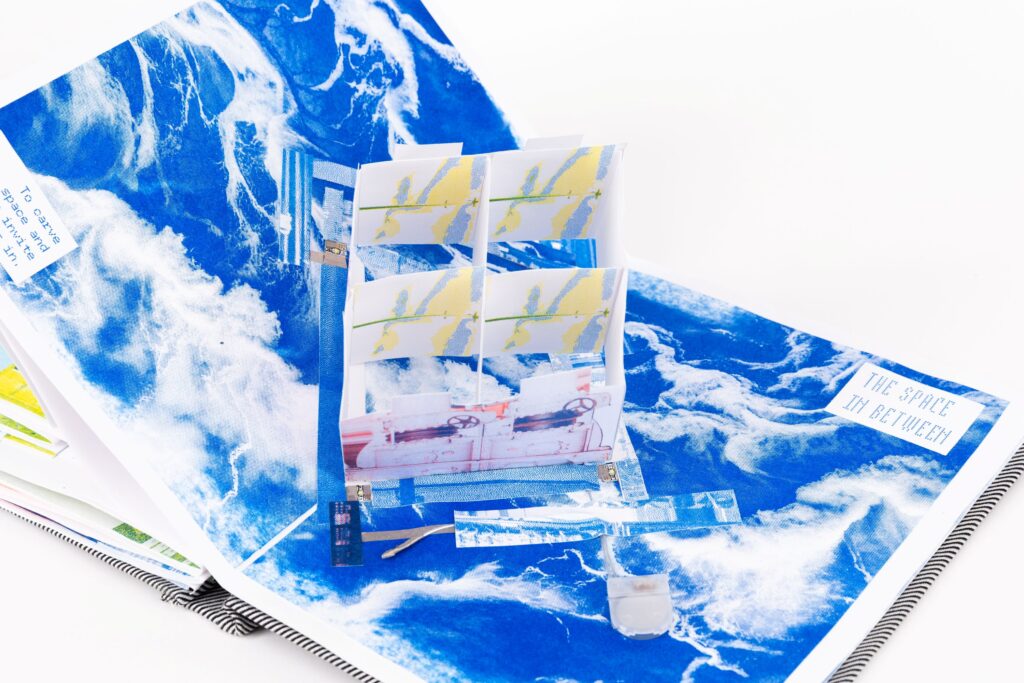
I was learning how to use the risograph earlier that semester, which has been interesting because it’s such a manual additive process. We change out the ink drum to add every layer of color, and it usually gives a unique grain and texture to the print. I would love to showcase this piece in an exhibition alongside other artists’ books that dive into a similar theme some day. I might also create another iteration of this project to perfect it, or perhaps create other pop-up variations of paper circuits + risograph prints to explore the medium.
How would you describe what you do?
I use textile, paper, and digital media to create soft-sculpture paintings, zines, or interactive narratives.
My work is often about people who work with their hands. Labor-intensive stitching plays a big role in both my physical and digital work. In my process, I may be binding a zine, cutting sewing patterns, or modeling meshes in Blender.
This risograph-printed zine [Rejoice] is a manifesto describing a practice of making that shows images of hands mending and washing garments, displaying an act of care to preserve and prolong the life of the belonging.
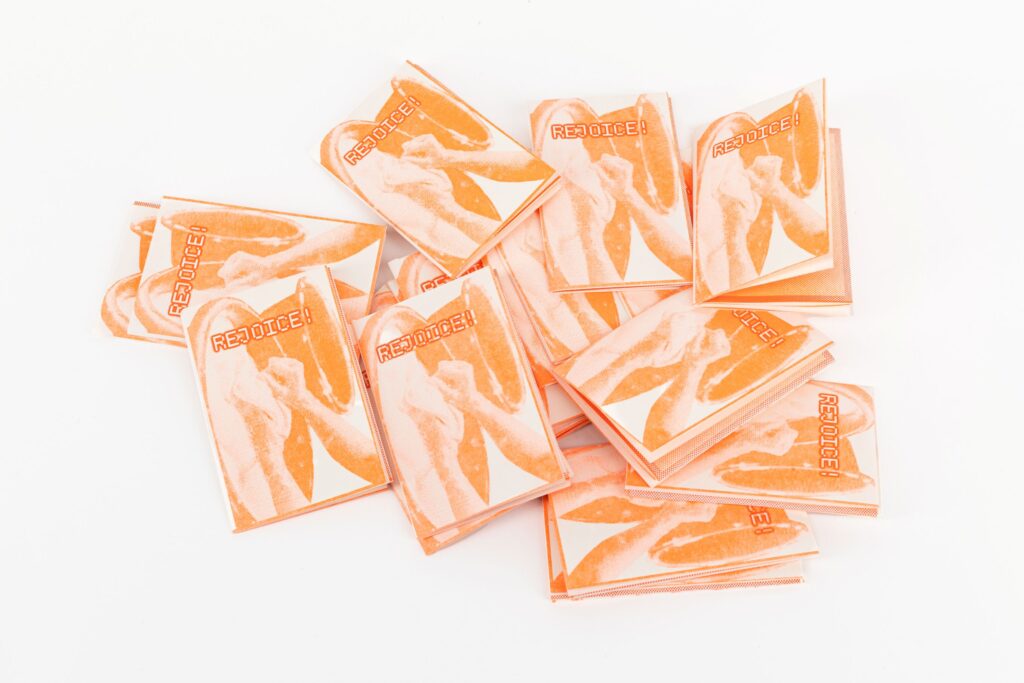
The cover displays an image of hands washing a garment, displaying an act of care to preserve and prolong the life of the belonging. The design of the zine is to be easy to reproduce and fit comfortably in the palm of the hand. Many of the pages contain images of hands mending, and when you hold it in your hand, it looks like you are holding hands with that of the zine.
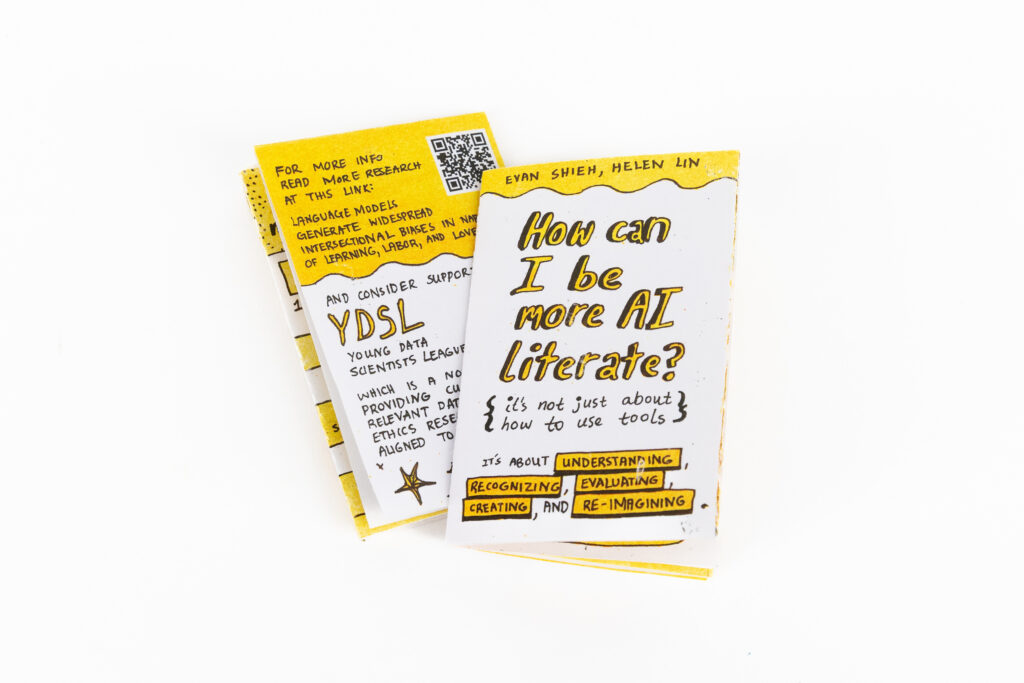
This zine was designed in collaboration with Evan J Shieh, director of the Young Data Scientists League. This small easy printable is meant to create artificial intelligence research and ethics knowledge more accessible, in a small palm-sized format meant to be freely circulated.
This risograph-printed zine contains the print materials connected to a sculpture that is part of a larger series. On the back, there is a NFC sticker where you can tap to scan with your phone, taking you to the full collection’s website archive.
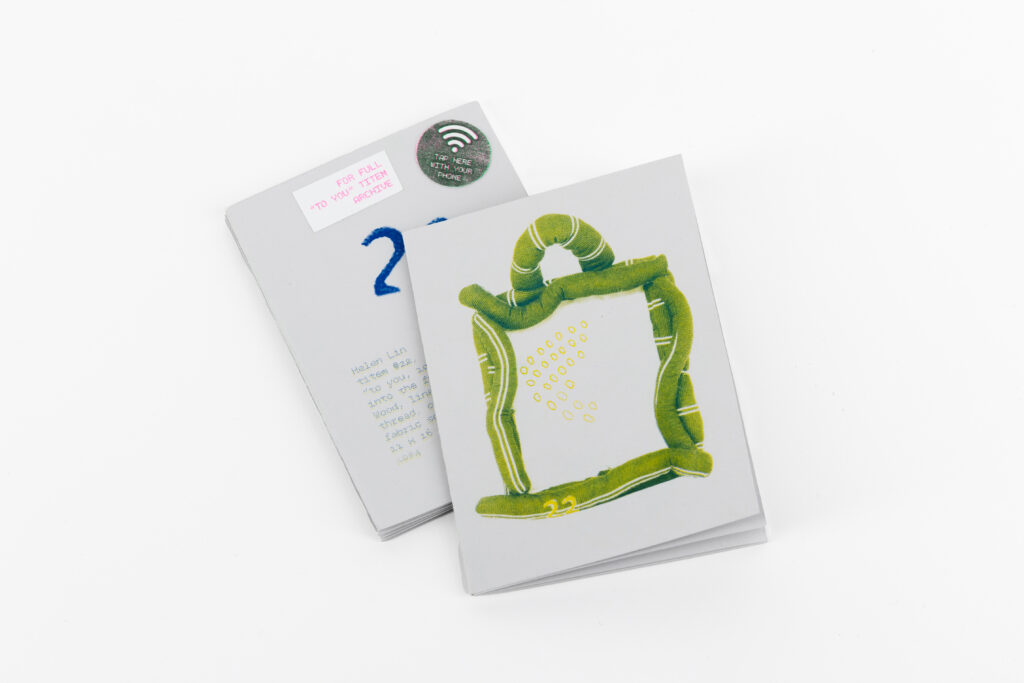
I especially enjoy making tactile, narrative-driven pieces that people can hold and engage with. I love creating artist books in particular because they have that built in invitation to hold, touch the material and flip through the pages. They are art objects that are only fully activated when the viewer opens and interacts with them.
What inspires you?
I’ve mainly been curious to investigate the relationship between textile and digital media. Processes like sewing pattern construction and digital UV mapping feel closely connected to me–both start from the outer seams that connect edges of exterior shells together, and then wrap together to create 3-dimensional form. I’m drawn to how different craft traditions overlap, and I enjoy moving between mediums to explore their shared logic. This flexibility lets me experiment with how stories can exist across physical and digital forms.
What challenges and joys have you encountered during your creative (and/or professional) journey?
Early on, it was difficult to balance work and my creative practice, especially growing up in a working-class immigrant family where financial stability was the priority. I didn’t have access to a lot of private classes or supplies and pursuing art didn’t feel practical, but it was something I deeply loved. It took a while for me to convince myself it was worth pursuing my creative ambitions, but this background I grew up with now greatly informs the artwork I create today. I often make work that deconstructs the commercial iconography of my neighborhood. With my parents busy working to make ends meet, I was instead raised by the delis and 99 cent stores, home-shopping TV, and Sanrio stationery boutiques. The rhetoric and visual vocabulary of these settings (free! sale! this could be yours!) continue to influence my work, making up a core part of my personal style and voice.
What do you want people to know about your creative process?
A large part of my creative process includes finding sustainable ways to create and prototype.
I love working with scrap fabrics and paper especially because they’re accessible, lightweight, and easy to quickly prototype with. I also often use secondhand fabrics and objects because they’re easy to source and also carry their own histories. These materials allow me to prototype quickly while also holding sentimental value from past lives. In a time with so much overconsumption and waste accumulation, I try to be mindful to reuse, and build narratives through these material memories.
Where can people learn more about you and your work?
You can find my work on Instagram at @helenlinyum. I also document projects and experiments on my portfolio and blog at helenlin.notion.site.
Helen will be exhibiting Tela Specula at the Living Gallery in Brooklyn, NY from 9-13 April.
Exhibition Events Page: luma.com/totouchistofeel
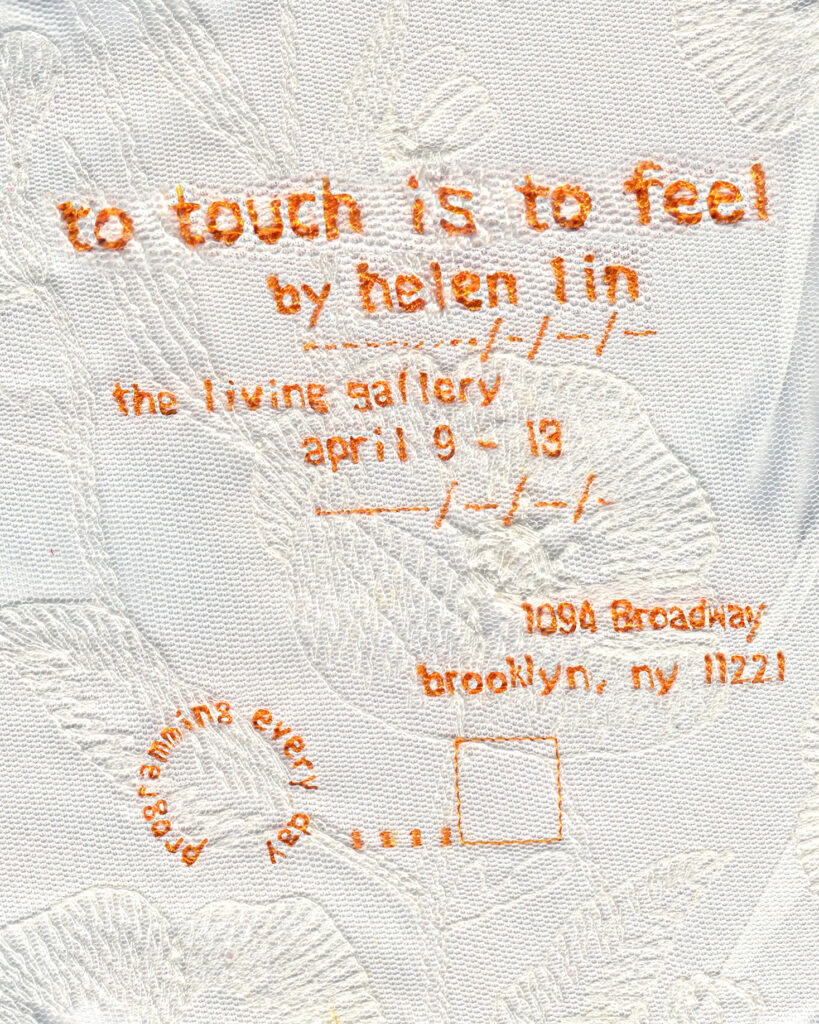
to touch is to feel builds an interactive textile archive using fabrics preserved from Brooklyn garment factories where Lin’s mother worked after immigrating to New York. Through analog craft and digital processes—laser etching, projection, and electronic textiles—the exhibition examines how labor persists beyond visibility, embedded within materials that continue to circulate globally.
Visitors are invited to activate works through touch, revealing layered narratives linking sewing practices with programming logic and technological history.
Opening Reception April 9, 5–8 PM
Artist Talk
April 11, 4-5:30 PM
To thread the machine: An Evening of Poetry & Performance
April 11, 6-7:30 PM
Gallery Open Hours
April 10, 3–6:30 PM
April 11, 1–4 PM
April 13, 2–6:30 PM