
71 Individual Connection Points: Infinite Impact
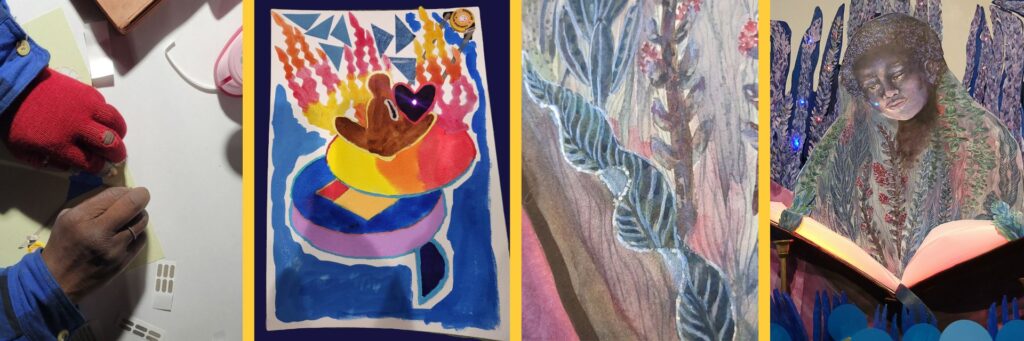
For over a year, Felicia Brooks (the 2026 Florida Middle School Art Educator of the Year) has been working on a complex exhibit with a community-based outreach component. Throughout the process she has explored soldering, carpentry, programming, and painting. Her deeply personal work has involved circuits, Artificial Intelligence connected to facial responses, and even the subtle use of aroma, such as the eucalyptus oil that reminds her of the cedar used to make school pencils. Her completed masterpiece, an interactive sculpture titled Art of Poverty: Youth, is a feast for the senses with a powerful message about the power of education and connection.
We are pleased to share an update on Felicia, a talented artist, educator, and Pathfinders alumna who has shared her tremendous growth with us during this impressive journey.
The last time we interviewed you was back in February as you were planning a free paper circuits workshop in your community. How did that go? What were your greatest take-away’s from that event, and others like it that followed?
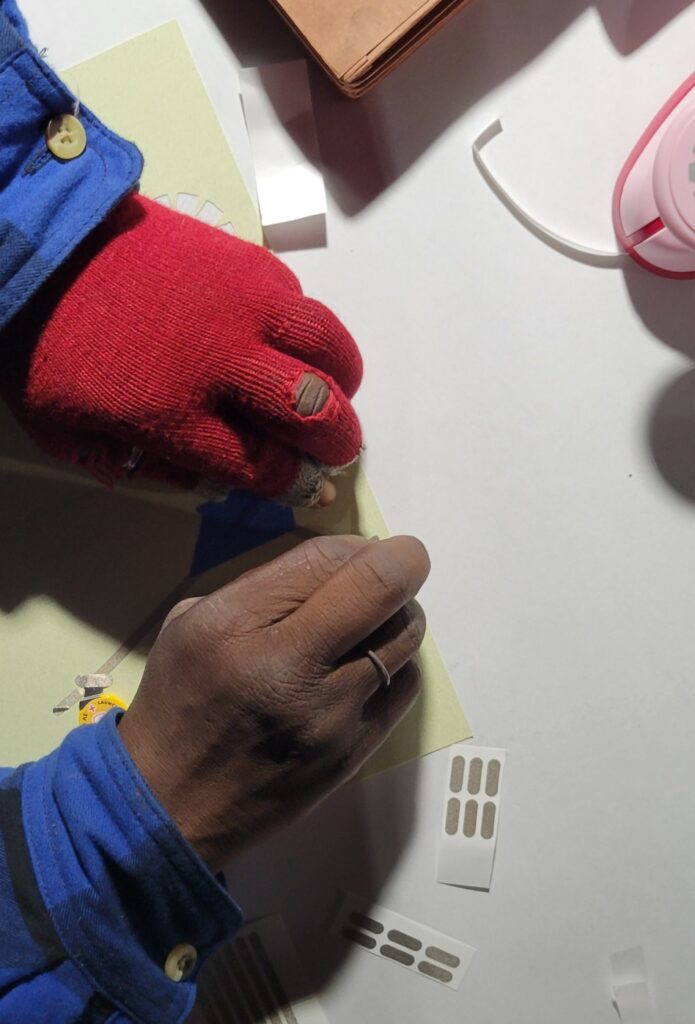
I have had the pleasure of hosting three free paper circuit workshops since then, and they have provided opportunities for connection, community engagement, and creativity.
The first was held during Lovebags, a homeless ministry, where I served for 13 years before stepping into art education. Participants illuminated meaningful moments where their needs were met, from travel to finding a place to stay.
Although the second workshop had limited attendance due to safety concerns, it became an opportunity to reconnect with a former student and his sibling, as well as invite Heart Community Resource Center employees to experience the joy of creating.
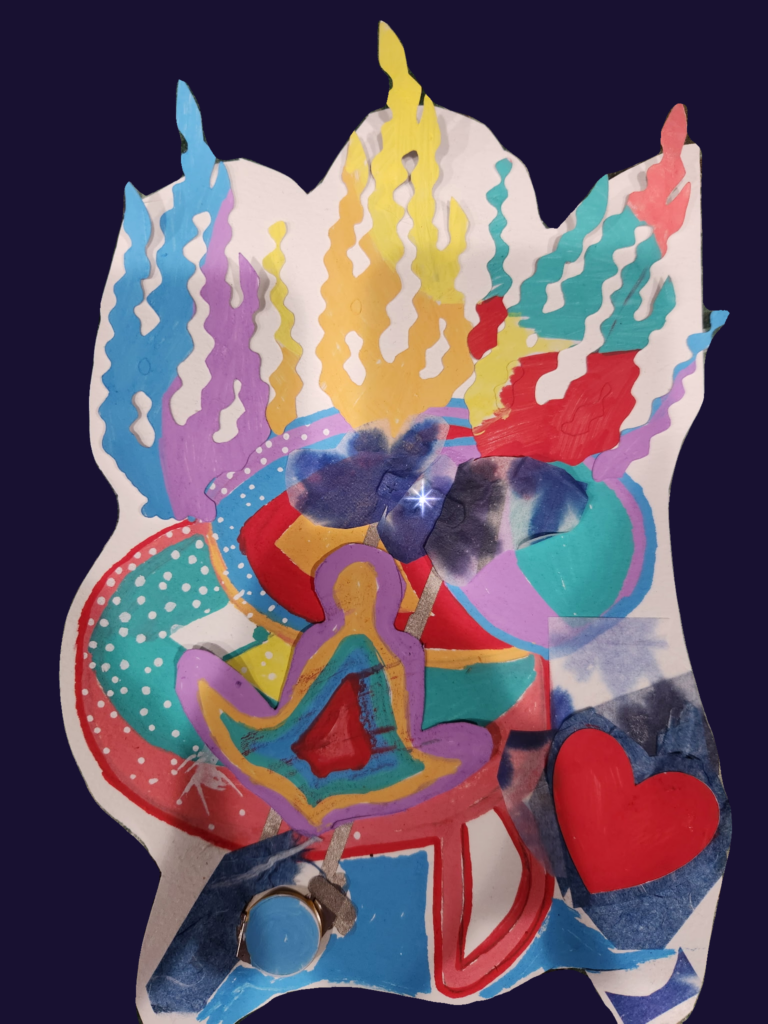
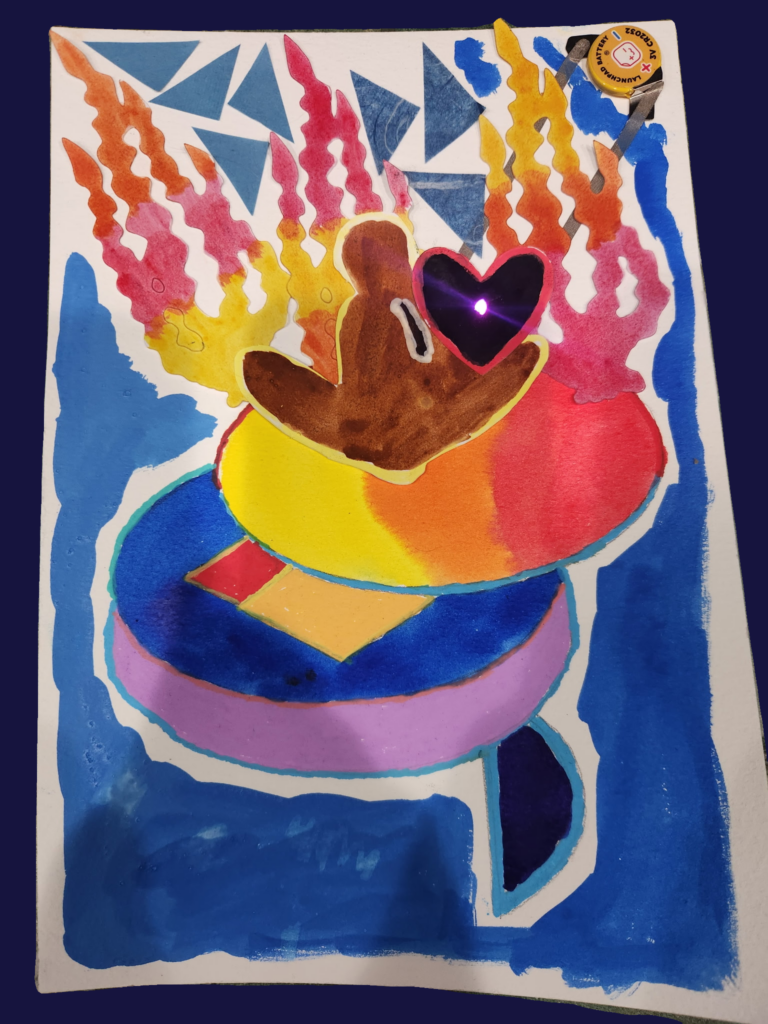
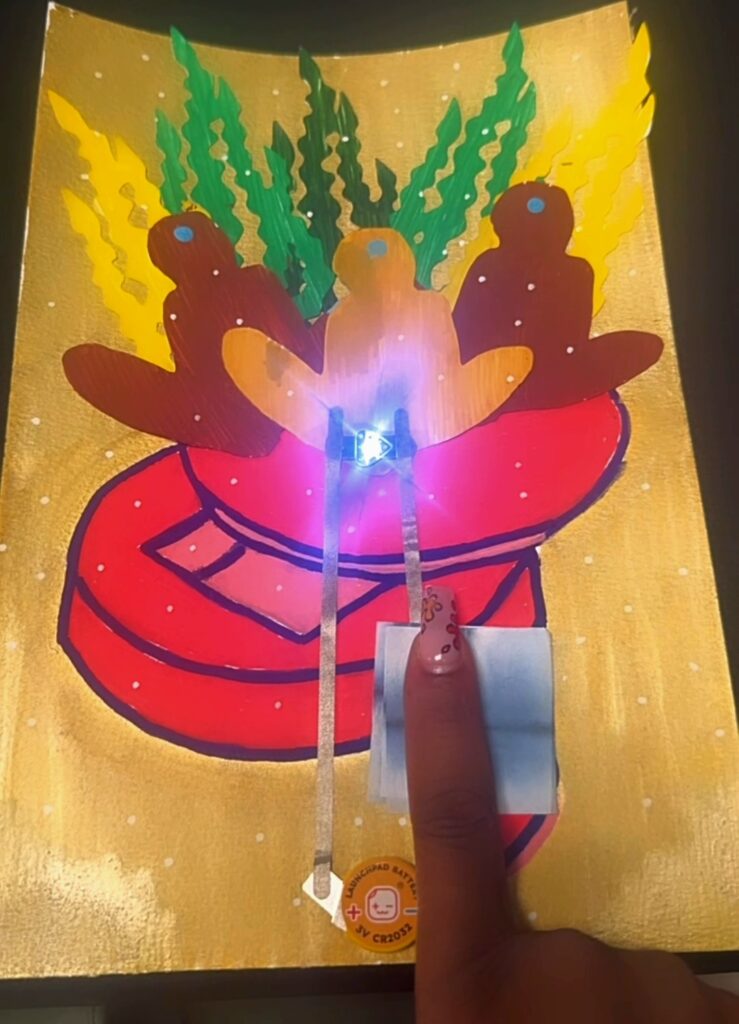
The final paper circuit workshop at the Daisy Art Center, ironically held in “The Circuit” room, was most rewarding, bringing together 24 participants ranging from student volunteers to supportive friends and the local community, for the first public unveiling of my Art of Poverty: Youth sculpture.
Participants explored the interactive artwork, shared feedback, and created their own illuminated art. Overall, the workshops extended beyond art instruction to foster meaningful relationships, encourage creative expression, and make art accessible.
What would you like for our audience of educators, artists, and makers to know about your most recent work?
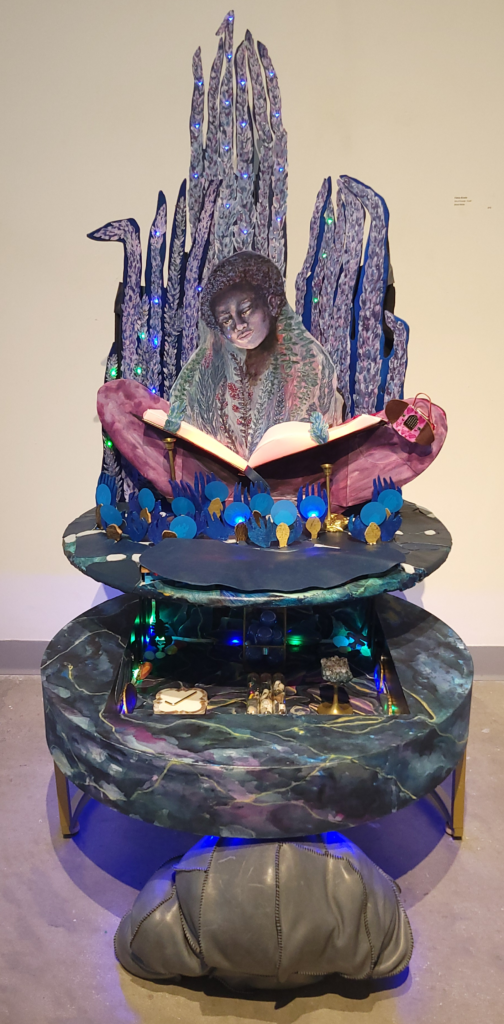
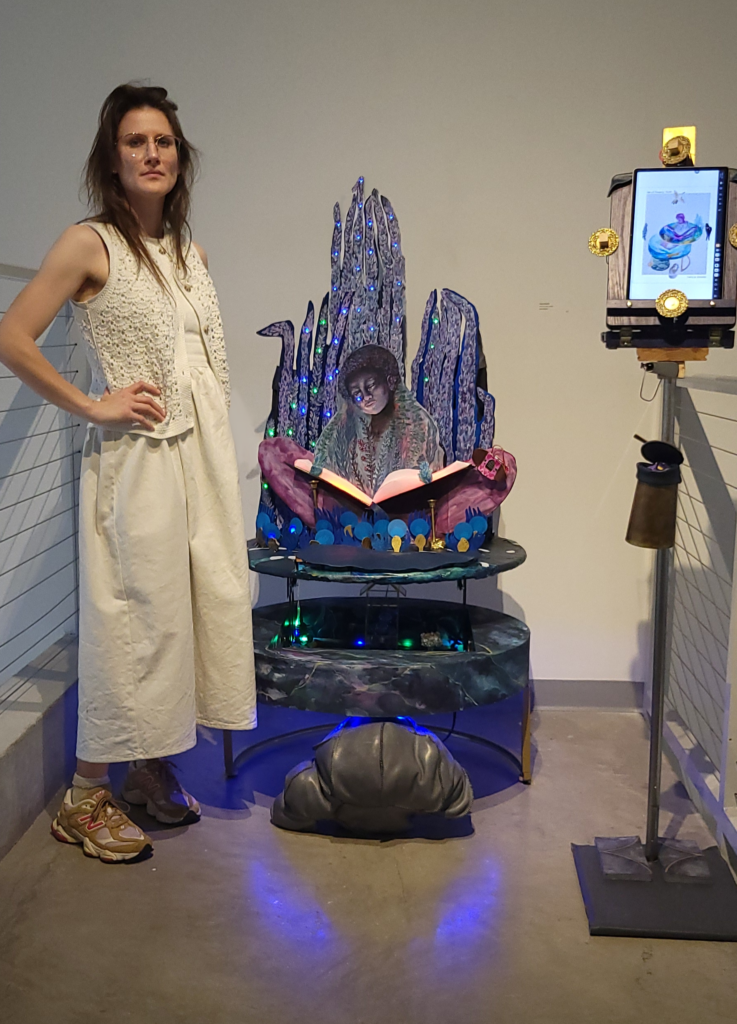
Art of Poverty: Youth is one of the most important works I have ever created. It represents a new level in my artistic journey, combining the technical skills I have developed as a teacher with the techniques I have cultivated as an artist. Inspired by my 13 years of serving the homeless, my experiences teaching at a Title I school, and my own childhood history with financial hardship, this work is deeply personal. It reflects my faith, my passion for caring for the poor, and my belief that education can be a pathway out of poverty.
[Mixed Media, Roughly: 3’x 5′ x 5′. Made possible with support from the Broward County Cultural Division Artist Support Grant and Grace Arts FL, Art Exhibition, Locations to Date: Daisy Art Center, Fort Lauderdale for Art of Poverty: Youth Art Talk and Workshop, 1310 Gallery, Fort Lauderdale for “Change” curated by @Nikoyulis]
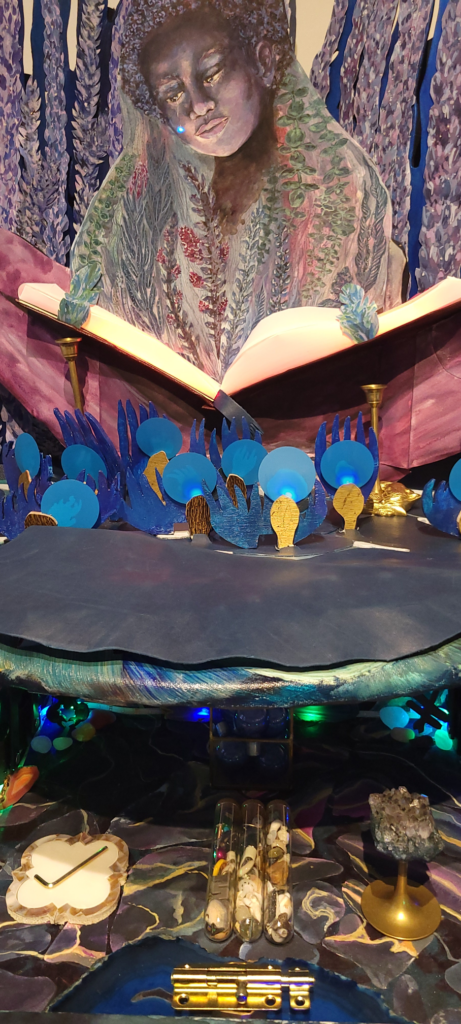
Rather than depicting the outward appearance of poverty, I wanted to reveal the beauty, resilience, and potential I see in my students.
Felica Brooks
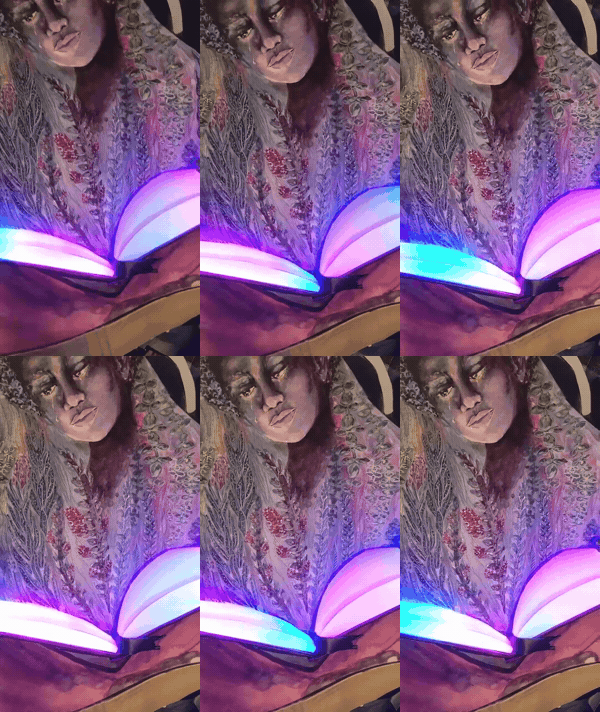
Rather than depicting the outward appearance of poverty, I wanted to reveal the beauty, resilience, and potential I see in my students. Rich blue pigments, gold accents, and pops of magenta and red bring the scene to life, while hidden treasures invite viewers to discover all that a young girl has to offer. At its center, a glowing book rests in her lap, symbolizing education as a source of hope and opportunity. The sculpture incorporates 71 individual connection points, programmed through multiple micro:bits, allowing viewers to interact with and orchestrate the Chibitronics LEDs.
Using reclaimed and donated materials, including a coffee table and cabinet door, I transformed overlooked objects into an illuminated, interactive work that merges art, technology, and storytelling. The accompanying Makey Makey and AI component extends the experience, allowing viewers to interact with an original poem and see their own reflections incorporated into the artwork. I am most proud of how this project brings together my identities as an artist, educator, and advocate, transforming a deeply personal story into an invitation for others to recognize the beauty, dignity, and potential in every child.
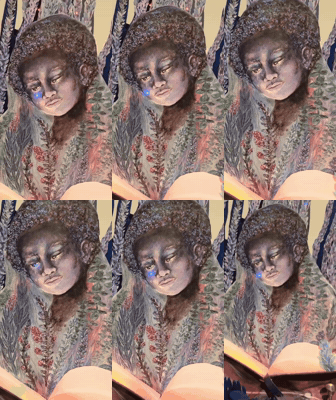
Scratch Project & Poem:
To read the poem, visit: https://scratch.mit.edu/projects/1286001401
What were your biggest technical achievements when creating this piece of art?
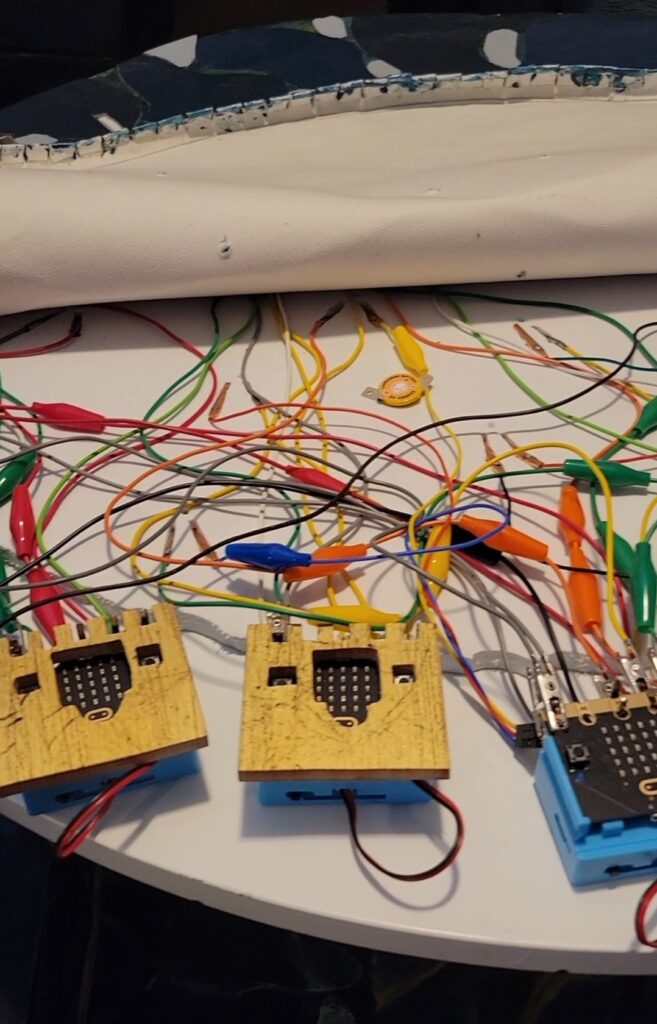
My greatest feat was organizing the alligator clips hidden beneath the table cover. I felt as though I was wiring a house! I soldered six clips to a single ground and attached it to the micro:bit. Let’s just say, it required quite a bit of electrical tape to ensure the positive and negative components never crossed paths. Once everything was tucked beneath the table cover, I retested the connections using a Launchpad Battery to make sure the ground and positive wires were properly in order once the small plants in the foreground were attached.
There was this last-minute “fun” challenge when lighting the plants in the background. I had already combined a strip of rainbow lights with a strip of blue lights, but the rainbow lights were drawing too much power, preventing the blue lights from illuminating properly when you pressed the micro:bit. I rewired it to connect all three blue light strips to one micro:bit and then moved the rainbow light strips to a micro:bit of their own. Thankfully, everything was then working as intended. I call it a “fun” challenge because I was able to think through the problem and found the solution quickly.
You have been brainstorming, prototyping, and working on this sculpture for quite a long time. What was the most rewarding aspect bringing the project from your imagination into reality?
This sculpture from conception to execution has taken approximately a year. As my first major work, it was important to maintain a healthy balance between family, work, and friendships. Time spent with my husband and children often provided me with the fresh fire I needed to get back into the studio.
As an educator, I regularly explore a range of materials and techniques based on student interest, so it was fascinating for me to develop my own work through unfamiliar and mastered processes, like cutting wood with a scroll saw and layman electrical engineering. I found myself pulling folding techniques from origami lessons, as I built the illuminated book. I gave meaning to found objects and allocated space for them in the composition, like I show my students to do in their own art. I used breathing techniques that I introduce when teaching miniature painting to steady your hands, as I invited my husband to hold down a wire with his finger while I soldered the metal together. I even gave myself the “Art Teacher Pep Talk” when I encountered errors and setbacks, extending the same patience and grace I offer my students.
Whenever I had a sketchbook in my hand, I was drawing the foundation of the project to wrestle with solutions for the problems I created. The most rewarding thing, though, was inviting the Holy Spirit to create with me. I experienced several breakthroughs when I paused and pondered His greatness. Even when resting in Christ, I would wake up with ideas in my head, as though God Himself were downloading plans into my heart while I slept.
What are your plans or goals going forward? Where can people learn more about you and your work?
I plan to continue developing a high-level, innovative art curriculum for my Magnet Middle School students at Parkway Middle School of the Arts in Lauderhill, Florida. I am equally motivated to grow as an artist, continually developing my personal work and pursuing meaningful opportunities to share it with the community. Ideally, I hope to have a solo exhibition in the near future and continue bringing my artwork to diverse audiences, from museum to homeless outreach, and anywhere in between. I believe art belongs everywhere, and desperate times call for creative measures.
You can find my work and process on my Instagram: Instagram.com/handsandeyes
Thank you.